
April 23, 2025 – The day we were told Oliver would not leave the hospital alive
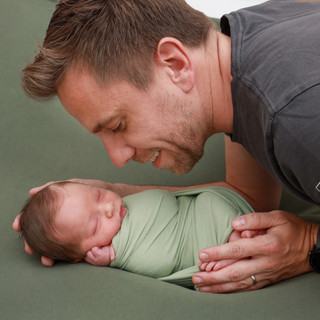
(Wednesday morning, 6 days after the accident)
In recent days you have seen our videos on Instagram and on television on RTL. We witnessed one of the most difficult moments of our journey: the moment several neurologists entered our room and told us that our son Oliver would not leave the hospital alive.
Today we would like to tell you the story behind it in brief.
On Wednesday morning, April 23, 2025, Laura was picked up early for a tomography scan.
Three days earlier, she herself had undergone a nine-hour operation. While she was being examined, I wandered the hospital corridors, made phone calls to doctors, and continued searching for answers. I had spent almost the entire previous night researching. Hardly any cases. Hardly any hope. And yet, there was still that tiny spark inside me.

When I later went to see Oliver in the intensive care unit, I received cautiously positive news for the first time in days. The night had been stable. His vital signs were within the normal range. The doctors were even considering reducing the sedation in the coming days. Oliver was still being kept in an induced coma after his major surgery to protect his body, and especially his head, as much as possible. The neck brace had also arrived, finally allowing him to immobilize his head.
For a brief moment, it felt as if a door was opening.

I sat with Oliver, read to him, and sang our songs. His pupils moved when I spoke to him, and his eyes were slightly open. In those moments, I was convinced: He was listening to me. He was there.
Shortly after, I was called to Laura's. We were waiting for the neurologist, whom I had contacted myself the day before. Just getting in touch with this neurologist was a small miracle in itself. I desperately wanted a second opinion on Oliver's spinal cord injury, which wasn't until April 21st. had been informed.
Despite everything, I clung to the hope that there might still be possibilities somewhere. One goal kept recurring in my mind: the USA, specifically Johns Hopkins in Baltimore, a clinic specializing in spinal cord injuries. I had this quiet but persistent hope that perhaps there was a way to help Oliver and give him a better life.
The man in question was Dr. Luis Herrera (name changed), a retired neurologist who had been the head of neurology at one of Mexico's most prestigious hospitals for many years. He was considered an absolute authority in his field. That's precisely why I placed such high hopes on this conversation.
I described our entire case to him and urgently requested that he personally review Oliver's findings. Dr. Luis reacted calmly and very attentively, and promised me that he would also speak with the surgeon.
This was Dr. Alejandro Morales (name changed), who operated on Oliver immediately after the accident.
With this knowledge in mind, I was convinced that we would now look to the future together.
The retired neurologist sat down calmly beside Laura's bed. His voice was calm, almost gentle. First, he explained the medical details of what had happened: the severe spinal cord injury, the lack of breathing, and the long period without oxygen after the accident.
And then came the sentence that cut our lives in two.
Oliver has no way out.
He cannot survive.
He explained that they could keep him alive for a while longer, but at most without consciousness, without movement, and without any real chance of survival. Sooner or later, he would die.
The neurologists also explained very clearly to us: even if Oliver were allowed to wake up, it would be a catastrophe from their perspective—for him, for us as his parents, and also for his brothers. Due to the long period without oxygen, the stroke in his cerebellum, and the severe overall injury, they assumed that Oliver might not even be fully neurologically present anymore.

These pictures, they said, would be the last memories we would have of our son.
I held Laura's hand. We both collapsed.
Laura asked only one thing: whether Oliver was suffering. The doctor said no. Oliver had lost consciousness in the accident and hadn't felt anything since. He had been asleep at the time. His last memories were of the happy moments that morning in the pool—playing together until he got tired, wanted his bottle, and fell asleep for his nap. We were told he never woke up from that sleep.
The conversation continued with the topic of organ donation. We were told very frankly that many of his organs had already been severely damaged in the accident. His heart was damaged. His lungs were impaired. His liver also showed abnormalities and was therefore not a suitable donor.
However, the doctors also told us something that has stuck with us:
With the organs that are still healthy, Oliver could potentially give hope to another child.
They explained to us that waiting lists were long, especially for small children, and that Oliver — despite all this tragedy — might be able to save another child's life.
At the same time, Dr. Luis very gently said something that almost broke our hearts: We should cherish the two wonderful years we had with Oliver. And we should also see the twins—they're still there, they need us.
But at that moment, nothing about it felt comforting.
Everything was simply horrific.
Nobody is prepared for a conversation like this. Not a parent. Not anyone.
Within a week he will leave us — and we will never see his beautiful eyes again.
We sat there, torn between hope and utter disbelief. Minutes before, we had believed things were slowly improving. Now we were supposed to accept that our son was going to die.
When the doctors left the room, only silence remained. And that recurring "why."
Why did his heart return?
Why did he react to our voices?
Why did it feel so much like he was still with us?
Later, I went to the parking garage alone. I lay down on the floor and recorded a voice message for Oliver. I told him how proud I was to be his dad, that we would always have a place for him in our lives, and that I wasn't ready to let him go.
But deep down I also knew: If everything the doctors said was true, then there was one thing we wanted above all else.
That he is not suffering.
When we went back to Oliver's intensive care unit that day, everything was different. For the first time, we stood at his bedside with the possibility in the air that we might not see him alive again.
We prayed.
We held his hand.
And we said something to our son that no parent ever wants to say:
When your time here is over, you may let go.
Laura and I talked for a long time that evening. Quietly, exhausted and broken.
We talked about where we would bury Oliver.
And eventually we found a quiet, fragile form of peace in the thought that Oliver had never suffered.
What happened in the days that followed,
We'll tell you more about that in the next blog post. 💛


Comments