
Your Little Hands Can No Longer Hold Mine
My dear Oliver,
One day, you will find many messages from me. Some are private; some have been or are public. I am writing this one to you as your dad. I want you to know how incredibly proud I am of you: of the way you face your situation, the joy you still show, and the progress you have already made. Many people could not have imagined you would come this far.
Your little hands can no longer hold on to mine. But when you say “Hand” or “Mano,” I know you want to feel me close.
And it is also true that you will soon have spent half your life living with this injury. So many things you want to do, you cannot do on your own. You depend on us to understand you and help you: to work out what you want, play the way you want us to, or find the TV show you want to watch. We do not always get it right. Then you become sad and cry.
In those moments, I feel helpless too. I want to read every wish on your lips and make it happen. Sometimes I cannot.
Maybe everyday life can simply feel boring sometimes. You are a child who needs variety, play, and movement. I am sure you would rather build with Lego, knock down towers, draw, and race around with your brothers on their bikes. Instead, so much of your day follows a program that happens around you, in a way most people could hardly imagine.
Yesterday I attended a spinal cord injury consortium. I was there to speak for you and to learn. Many of the people taking part live with a spinal cord injury themselves. It reminded me that there is no simple scale of “bad” and “worse” when every person has lost something they once could do. Every story gave me goosebumps. Some people can stand or walk with help.
Others can move their arms but cannot use their fingers or grasp things. And a few cannot move at all and need a ventilator, like you with your very high-level injury.
We work with you all day. We go to the rehab center, and therapists and doctors with different specialties come to our home. The therapies alone take about three hours a day. Then there is nursing care, personal care, and everything else needed to help you feel comfortable and safe.
The consortium also talked about the effects people do not see right away. For many, it is hard not to be as mobile as before. But the secondary effects of a spinal cord injury can weigh even more heavily on everyday life. Sadly, you experience many of them. Sometimes you cannot sleep well even when you are exhausted. Your body and your mind seem to feel that exhaustion differently.
You cannot control your bowel or bladder on your own. Helping you with that is part of every day and takes a great deal of time.

You cannot regulate your body temperature on your own either, so you hardly sweat. During sensory stimulation, we offer you warm and cold water and dip your hands or feet into it. Sometimes you say you can feel it. Then I wonder whether you really do, or whether you simply say “yes” because you do not want to disappoint us. I wish I could know for sure.
Your suprapubic catheter brings us one worry after another. There have been infections, and you had surgery because of bladder stones. An infection can be dangerous for you. We have to use antibiotics, and I worry about what it could mean if these infections keep coming back. That fear stays with me as your dad.
A big part of our everyday life is cleaning you and keeping everything clean. We do it to protect you and because we want you to stay with us, without having to go through another infection or a complication that could have been prevented. I know an infection could put your life at risk. The thought that one of our mistakes, or putting something off, could lead to something terrible eats away at you.
There is no taking it easy for a day with this care. We cannot clean a little less and leave it until tomorrow. It has to be done, again and again.
You get your nutrition through your feeding tube, your G-tube. You have not eaten by mouth for almost a year. It seems as if you have forgotten how to eat and no longer want to open your mouth. We offer you things you used to like, but often you do not even look at them. That hurts too, because I remember how much you loved some of those things.
And then there is your tracheostomy, the most visible sign of your injury. You breathe through it. If water or mucus gets into your throat, we have to suction it out. The tube goes deep into your throat. Every time, your face tightens. I wish you could not feel it. But maybe you can also feel that, for those few seconds, the ventilator is not giving you enough air. I cannot know for sure. I only see your face and wish it were over quickly.
Your skin needs special attention too. Long periods lying or sitting down, always in the same positions, can lead to wounds. For almost a year, the large scar on your back was open in several places, sometimes inflamed and infected. Doctors and wound-care specialists helped us. Still, it is an ongoing problem when you cannot move or relieve pressure on your own.
At the consortium, I also heard about osteoporosis: bones can lose strength when they are not put under load. It has been so long since you stood on your feet or carried something from one place to another. The bottoms of your feet are as soft as a baby’s. You are still my baby. And yet I sometimes think you should have calluses from running around barefoot.
Scraped knees from playing. Little marks from an ordinary childhood. Instead, your skin there is almost impossibly soft.
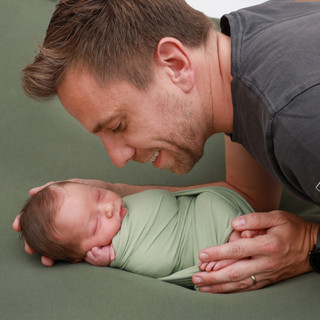
I often hold your hand in mine while my other hand rests on your head and strokes your hair. You want that. You keep saying “Hand” or “Mano.” I think that physical closeness helps you know someone is there with you. My hand is on your head as often as I can manage. Without that touch, you sometimes become afraid of being alone.
Many people know that terrible dream where you think you are awake but cannot move. A hand gives you a sense of safety. I want you to feel it.

We share your progress and so much of what we do every day. Sometimes it feels like Groundhog Day: waking up, personal care, help with your bowel and bladder, therapies, moving from bed to wheelchair. You watch the others play. Every other day you go to kindergarten, and we also go to the rehab center. Your days are full. No two days are exactly alike, and yet they are much the same.
Oliver, we had the first parent meeting at your kindergarten. The director honestly told us she was surprised by how clever you are. Your body has these limitations, but you understand how things work, how to sing, and why we do things. You know the colors in three languages. You cannot imagine how proud that makes me.
So many people online leave kind, loving comments that I often wonder why they take the time to write such beautiful things to you and to us. And then there are people who take the time to spread hate. They ask what kind of life this can be for a little child. Maybe people do think that. I think about your life and your future every day myself. But it is my responsibility to give you the best life I can, with all the love I have.
There are also things you really do not like. When we briefly disconnect the ventilator from your tracheostomy to encourage you to breathe, the machines beep. Your face tightens, tears roll down, and you look at the tube in our hand. You want it connected again. Yes, you can breathe on your own. But you are afraid. You are three years old. Who could blame you?
Those few minutes are among the hardest parts of my day. I see you suffering, and I suffer with you. That is why we no longer do these exercises every day. When people ask about your breathing at appointments, we tell them honestly where things stand. It is hard to talk about it without the emotions taking over.
Sometimes a family member writes, “If Oliver could breathe on his own, that would be such a big step.” Nobody means any harm. There are hardly any right words for a situation like this. But who gets to decide what the greatest progress would be? Being able to breathe on your own would matter. And even then, you might still not be able to move, not even hold your own head up. Breathing is an important part of your journey, but it is not the whole journey.
Two weeks ago, we were training a new caregiver. It is hard work because we have to explain every step in detail. She did not come back after that because the job was too difficult for her. We had just explained something to her when your head fell forward in your wheelchair. You could not lift it back up by yourself, so you called “Hey, hey, hey” until we noticed. Thankfully, that moment was not life-threatening. Your head and neck are stabilized with metal from the front and back.
Before your surgery in Chicago, a moment like that could have ended very differently. I think about it and feel grateful that you are protected now.
So is breathing on your own enough to be our goal? No. I want to give you back as much of the life you lost as I possibly can. I wish I could see what you would be like now and what you would be doing at your age without this limitation. It hurts every day, Oliver. I suffer with you.
I tried going back to work again. I am not ready yet. I can barely sit in a meeting and debate with colleagues or managers about whether the yellow route or the red one is the right choice. People argue over things that can feel unimportant next to real life. I spent 26 years in a role like that. I loved my work. My job and my family with my children both fulfilled me.
But since the accident, it no longer feels right to play a role somewhere else when my place is with you. No one but Mom can share the role of being your dad with me.
I know I will have to go back to work. I will do that when I am able. Right now, the most positive contribution I can make is here, with you and your brothers. What I am experiencing is PTSD, post-traumatic stress disorder. If you have never known it, you might think it is something like burnout or depression and that a person simply needs to start functioning again.
But that is not how it feels to me. You, Oliver, are my healing and my medicine. Not because it is your job to make me well, but because being close to you and loving you gives me strength.
Often I close my eyes and see your funny little movements. The way you walked was so uniquely adorable. The way you danced, and above all, the way you gave love. Every time I came upstairs from the basement office I used to work in, you would run to me and hug me. I love thinking about that, because I miss it so much.
When I told you I had to go back downstairs because a meeting was coming up, you would not accept it. You would throw your shoes downstairs over the baby gate. I once asked Mom why we never really scolded you, the way we sometimes did your brothers when they argued or got the “zoomies.” We had no answer. Everything about you came wrapped in a smile. I am not writing this just because your life is different now. The people who knew us, who visited and saw little Oliver running up and down the street, know exactly what I mean.
People often ask how we manage financially if I am not working. Of course that question hurts. I was proud to earn the money for our family. Today I am proud to put my strength into our family. Our life has become more expensive now that not everyone is healthy. We share part of it publicly and have thanked people for their support, and we always will.
We can only make part of this journey because of donations. I do not want to say more about that right now. I do not ask other people how they afford their house or car.
Dear Oliver, there is one more honest thing I want to tell you. I have had some very hard moments over these past months. When you were asleep, I was sometimes so desperate that I drank. But I realized it changes nothing and makes nothing easier. Quite the opposite. If I hurt myself, I cannot be there for you the way you and Mom need me. It is not wrong to feel weak. Giving up would be.
And I will not give up. I will keep trying to be the best version of myself I can be, for you and for our family.
Oliver, I will do everything I can, until my last breath, to give you back what you lost. I hope I can. Until then, there is one thing I want to give you every day: my unconditional love. Some children are healthy and still feel alone because their parents do not have the time they wish they had, or because their family has come apart. You cannot move your body the way you want to, so I promise you this: I will be there.
Even when it tears me apart to see you cry, touching my nose to yours is one of the most beautiful kinds of therapy for me.

I also want to tell you about the accident, the moment that changed your life. I listened to a podcast called “Schicksal” (“Destiny”), where a man described his near-death experience. He said it felt warm, very bright, and that everyone he loved was there beside him. Two lights asked him to come with them, but he chose not to. Maybe you had a warm moment like that too, and chose to stay.
When you woke from your nap, everything was different. You could move only your eyes, and the rest of your body was stiff.
The accident is always with me. From what I experienced and what witnesses told us, I know the driver of the armored cash truck was speeding. And still, I replay those seconds every day. I think I could have prevented it if I had reacted better. I saw the car coming. It was so fast, Oliver, and I just screamed. I was afraid you, Julian, and Sebastian would die.
In that moment I was not thinking about myself. I was afraid for what is most sacred to me: my family, my children.
Why did I just scream? Mom hit the brakes because I startled her. We were hit in the side, right in the middle. Sometimes I wonder if we might have made it across the road just before the armored cash truck, and it would have been one of those close calls people talk about afterward. Why did I not say “Faster,” “Speed up,” or “rápido”? Mom and I speak three languages, but none of them feels exactly the same to both of us.
Maybe screaming was all I could get out in that moment.
Your brother Sebastian must have woken up. He had been asleep too, but he was not as tired as you. You and I had spent four hours in the pool that morning. You did not want to get out. You kept jumping in, and I had to catch you. You were the happiest child on earth. Eventually your eyes were red and you were so tired that you asked for your “Bibi,” the milk you always wanted before your nap. You fell asleep on the sofa beside me.
Usually, as soon as anyone moved you, you woke right up. So I stayed as still as I could. Later, we decided to go to a restaurant as a family. I carried you to the car while you were asleep. You woke briefly as I put you in your car seat and buckled you in, then fell asleep again straight away. I did not really need to use the bathroom. Still, I went because I had not been all morning.
Maybe I would have been driving instead of Mom if I had not gone. That does not mean I was responsible for the accident. But I still wonder whether we could have crossed the road the locals call “Cruce de la Muerte,” roughly “Crossroads of Death,” before the armored cash truck if we had left earlier.
Sometimes life is like that: one small decision changes everything. I know I cannot change it now. Still, those moments replay in my mind day and night. For a long time, everything felt like a bad dream. Now I know it is real. The thing that usually happens to “other people” happened to us.
You had been asleep, you woke up different, and yet you are still the same Oliver. Having you in our lives is a gift. At the same time, what happened to you is the worst thing Mom and I could face as parents. That is why I will not stop. I will keep searching, every day. I talk to people, read about spinal cord injury research, and share what I learn with others facing a similar fate.
Oliver, we have incredible hope in stem cell therapy. I thought we would travel to Chicago at least twice this year to receive several injections. But we are also fighting bureaucracy and the fact that your case is so unique. We still have not received the go-ahead. You deserve this chance at possible improvement. And we know you will not simply get up from your wheelchair afterward. It will be another part of your journey. I am sorry you have to go through all of this. At the same time, I cannot accept that what happened to you should be the final outcome.
Thank you for laughing. Thank you for being so strong. Often I do not know what to do and just want to cry. Then I come to you, put one hand on your head, and take your hand with the other. We close the circle. Then I am where I belong: with my little Oliver.
I love you. Never forget that.


Comments